
TL;DR – Key Takeaways on Educational ERPs
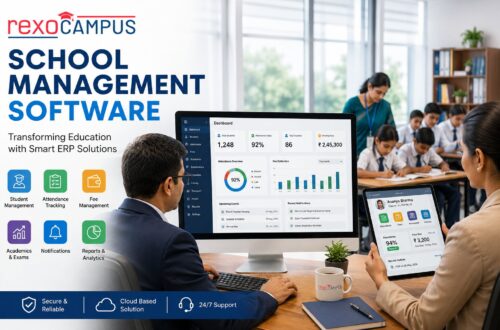
Navigating the complex ecosystem of modern education requires far more than basic spreadsheets; it necessitates robustschool district erp system components that centralize every facet of operation. At the heart of this transformation is the school management system and a powerful student management system. Whether you are searching for the best school erp or evaluating an erp higher education platform, understanding the architecture is crucial. A complete system seamlessly integrates attendance software for schools, an intuitive new school login portal, and online school accounting software to bridge the gap between administration and academics. In this comprehensive guide, we unpack the essential elements—from student database management to advanced asset management software for schools—ensuring you have the foundational knowledge to deploy the best erp for educational institutions.
1. The Genesis of Educational Resource Planning: What Are Student Information Systems?
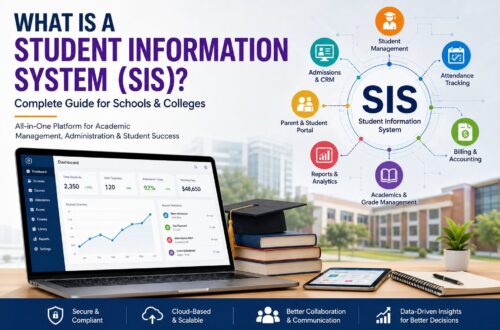
The landscape of education has evolved remarkably over the last two decades. We have transitioned from rudimentary paper-based filing systems to sophisticated, cloud-native environments. To truly appreciate the scale of this technological leap, we must first answer fundamental questions: what is a student information system, and what are student information systems in the broader context of an integrated Enterprise Resource Planning (ERP) platform? In essence, a student information management system serves as the digital beating heart of any educational institution. It is the centralized repository where all critical student data management occurs.
However, an isolated information system is no longer sufficient. Today’s educational leaders demand a holistic school management system that intertwines academic tracking, financial oversight, human resources, and stakeholder communication. When you deploy the best school management system, you are not merely purchasing software; you are investing in a comprehensive structural overhaul that redefines how faculty, students, and parents interact with the institution.
Understanding school district erp system components requires us to look at the macro and micro levels of school administration. An ERP (Enterprise Resource Planning) platform tailored for education takes the core philosophies of corporate ERPs—efficiency, centralization, and real-time data access—and customizes them for the unique workflows of K-12 districts, colleges, and universities. The implementation of robust school erp software represents a monumental shift towards operational excellence.
2. The Core Architecture: Essential School District ERP System Components
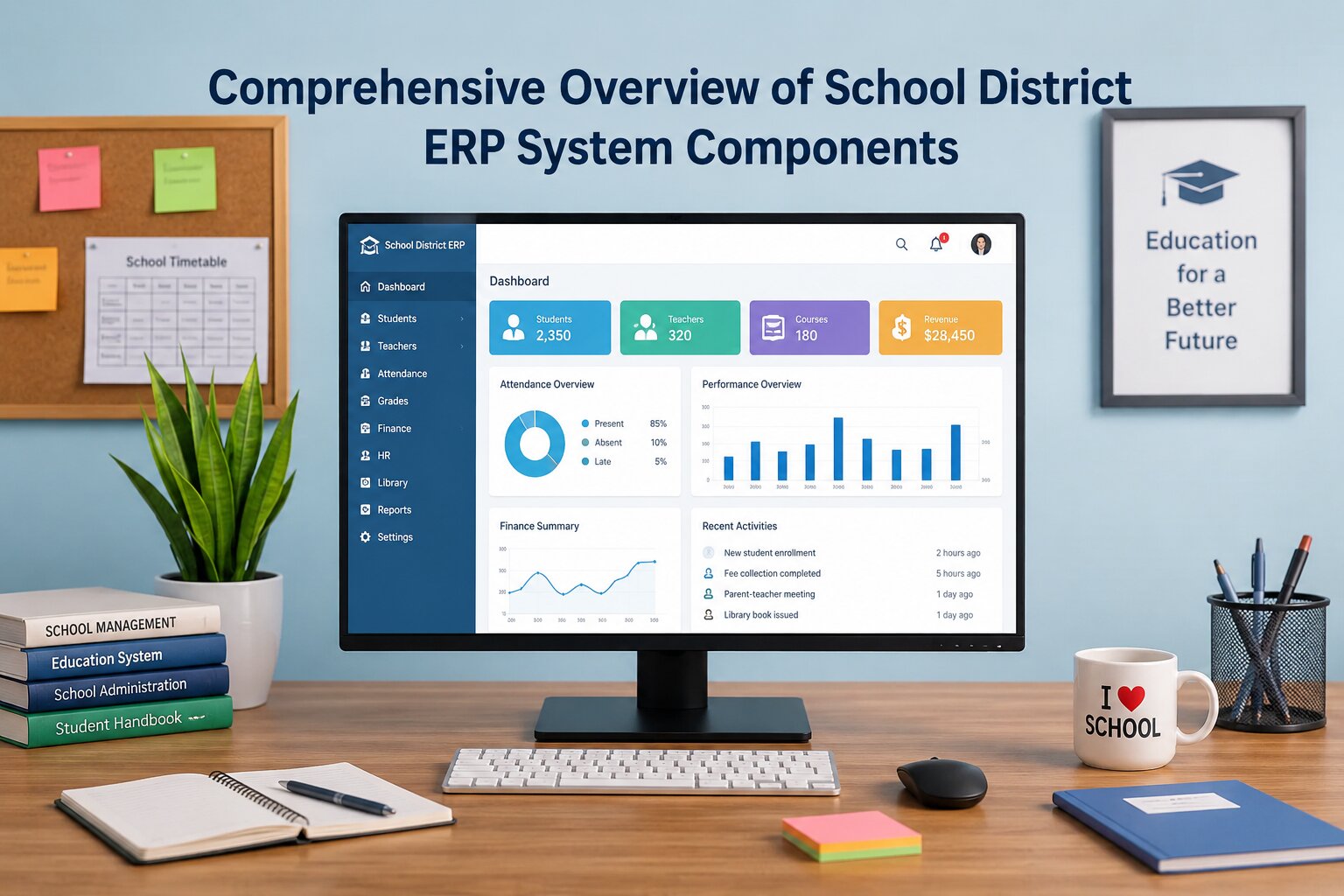
To grasp the true power of the best erp software for schools, we must meticulously dissect its architecture. A premier ERP does not function as a monolithic block; rather, it operates as a symphony of interconnected modules, each designed to optimize a specific administrative or academic task. Let’s delve into the primary school district erp system components that constitute a world-class platform.
A. The Engine: Student Management System Software
At the epicenter of any educational ERP is the student management system (often referred to simply as student-management or student managment). This module is the ultimate source of truth for the entire student lifecycle, from initial enrollment to alumni relations. A high-tier student management system software handles demographics, medical records, disciplinary history, and academic transcripts. It is the bedrock upon which all other student database management tasks are built.
The modernization of the student database management system has allowed for predictive analytics. By leveraging a comprehensive student management system, educators can identify at-risk students before they fall critically behind, thus transforming the software for student management into a proactive tool for student success rather than a reactive filing cabinet.
B. Financial Precision: Online School Accounting Software
Managing the finances of a school district or a college campus is a monumental task that rivals the complexity of mid-sized corporations. The inclusion of dedicated online school accounting software within the ERP is non-negotiable. This component transcends basic bookkeeping; it encompasses budget forecasting, grant management, payroll processing, and complex fund accounting required by state and federal regulations.
Furthermore, seamless integration with school billing software ensures that the accounts receivable department functions smoothly. Whether tracking cafeteria balances, extracurricular fees, or textbook fines, the school billing software ensures transparent and accurate financial interactions with parents and guardians.
Legacy Systems vs. Modern ERP Systems
When comparing outdated standalone systems to a modern school erp software ecosystem, the differences are profound:
- Data Silos: Legacy systems store data in isolation. Modern ERPs utilize a unified student database management system.
- Accessibility: Old systems were localized. Modern platforms provide a secure new school login from any internet-connected device.
- Scalability: As your district grows, the best school erp scales effortlessly, whereas legacy systems require painful, manual migrations.

3. Deep Dive into Student Administration and CRM
The concept of student administration has broadened significantly. It is no longer just about enrolling students and assigning them to classes. Modern student management systems incorporate powerful Customer Relationship Management (CRM) tools tailored specifically for the educational sector.
The Role of the School CRM
A robust school crm is fundamentally changing how educational institutions interact with their communities. By treating parents, students, and alumni as vital stakeholders, a school crm enables personalized communication at scale. Automated enrollment reminders, targeted newsletters, and event invitations are managed effortlessly. The integration of a school crm within the broader school management system ensures that every touchpoint with a family is recorded, tracked, and utilized to build stronger institutional relationships.
Mastering Attendance: Attendance Software for Schools
Accurate attendance tracking is not merely an administrative requirement; it is heavily tied to funding and student safety. The attendance software for schools embedded within the ERP utilizes advanced technologies—such as biometric scanners, RFID ID cards, and mobile apps for teachers—to capture real-time data. This student data management is instantly synced with the student information management system, triggering automated alerts to parents if a student is unexpectedly absent, thus providing peace of mind and strict accountability.
For those utilizing specialized portals like student-management.pro, the synchronization of attendance data with academic performance metrics creates a 360-degree view of the student’s engagement and overall well-being.
4. The Evolution of ERP Higher Education: Beyond the K-12 Model
While K-12 districts have unique requirements, the complexity increases exponentially when dealing with universities and colleges. An erp higher education platform must accommodate entirely different academic models, complex financial aid structures, and massive campus infrastructures.
Navigating Campus Management Systems
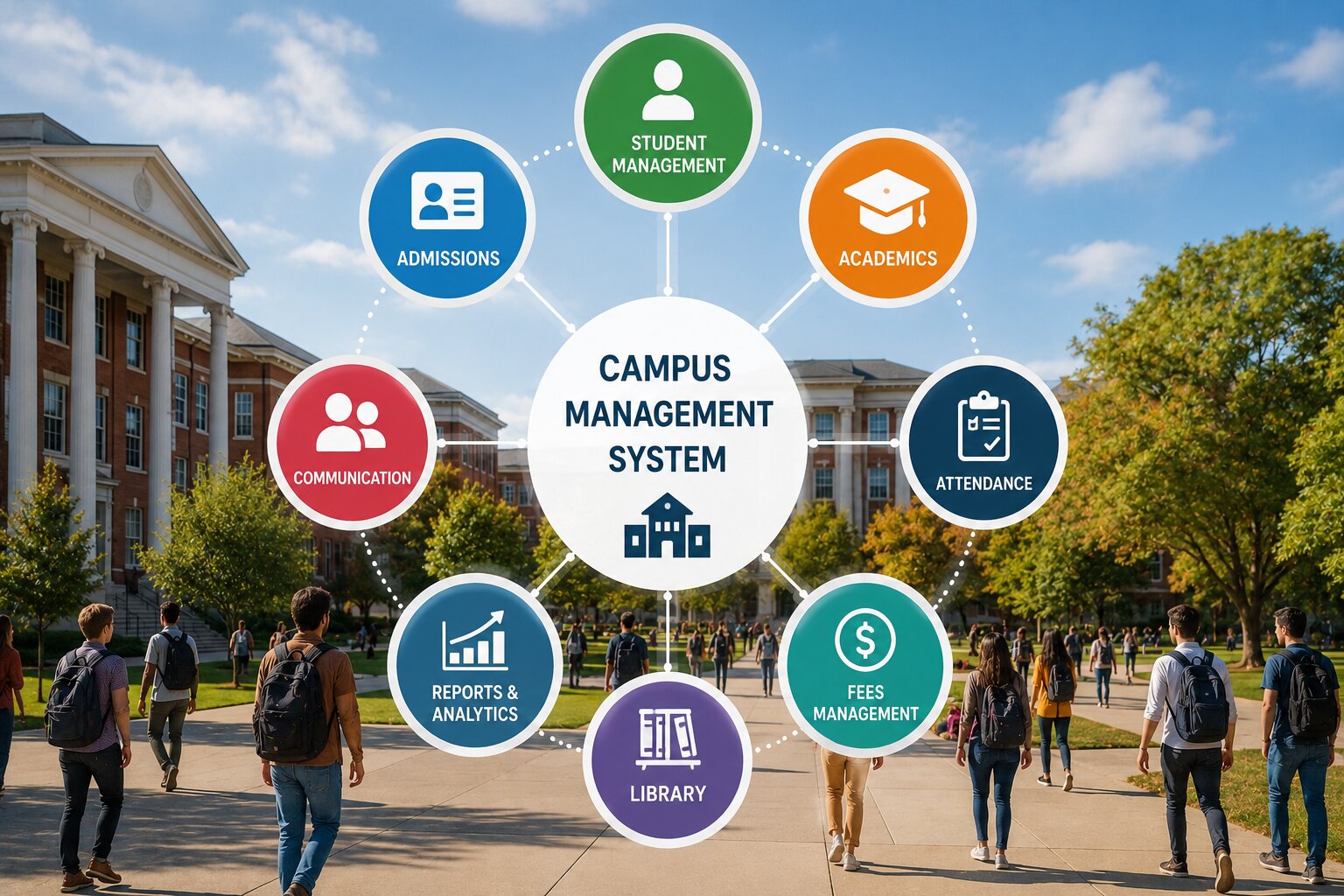
A campus management system or college management system takes the foundational school district erp system components and scales them for a tertiary environment. This involves intricate scheduling algorithms that can handle thousands of students selecting varied courses across multiple campuses, managing pre-requisites, and optimizing faculty workloads. A true college management solution goes beyond the classroom, integrating housing, dining services, and campus security into one cohesive interface.
Financial Nuances: Higher Education Accounting Software and Tuition
In the collegiate sphere, the financial stakes are exceptionally high. Higher education accounting software must manage massive endowments, complex federal funding, alumni donations, and intricate departmental budgets. A critical subset of this is the deployment of sophisticated tuition management systems.
These tuition management systems handle variable pricing based on residency, academic program, and scholarship applications. They must seamlessly integrate with financial aid offices to disburse federal loans and grants accurately. Consequently, the higher education student management system acts as a financial nexus, ensuring students have clear visibility into their financial obligations and payment plans.
Academics and LMS Integration
In modern universities, the ERP must interface flawlessly with various learning management systems for colleges (LMS). While the ERP handles the student administration and backend data, the LMS delivers the actual academic content, assignments, and grading. The seamless bidirectional data flow between the higher education student management system and the LMS ensures that grades are automatically transcribed and degree progress is updated in real-time.
5. Operational Backbone: Asset Management and Human Resources
Education is a resource-intensive endeavor. The physical and human capital required to run a district or a college is staggering. Therefore, evaluating the best erp for educational institutions must heavily weight the operational and backend modules.
Asset Management Software for Schools
From thousands of Chromebooks and iPads issued to students, to laboratory equipment and transportation fleets, tracking physical items is a monumental challenge. Integrated asset management software for schools allows administrators to track the lifecycle, depreciation, and maintenance schedules of every valuable item. Through barcoding and RFID technology, the asset management software for schools minimizes loss and ensures that technology budgets are spent efficiently rather than on replacing misplaced hardware.
Human Capital Management
Teachers, professors, and administrative staff are the lifeblood of the institution. The human resources module within the school erp software handles recruitment, onboarding, certification tracking, payroll, and benefits administration. By centralizing HR data within the broader school management system, institutions can easily align staffing levels with student enrollment projections, ensuring optimal student-to-teacher ratios.
6. Strategic Implementation: Deploying the Best ERP for Educational Institutions
Selecting the best school erp is only the first phase of the journey. The implementation of such a comprehensive student database management system requires meticulous planning, change management, and technical expertise.
The Path to the Best School Management System
To successfully roll out new school district erp system components, institutions must follow a structured approach:
- Needs Assessment: Clearly define the pain points. Is the current school billing software failing? Is the software for student management too slow? Understand what you are trying to solve.
- Data Migration: Moving legacy data into the new student information management system is the most critical technical step. Data cleansing must occur to ensure the new student database management environment is pristine.
- Customization vs. Configuration: The best erp software for schools should require minimal heavy customization. Rely on flexible configurations to adapt the software to your specific workflows without breaking future upgrade paths.
- Training and Change Management: Introducing a new school login portal and a completely revamped student-management workflow will cause friction. Comprehensive training programs are essential for user adoption.
When institutions rush the implementation of their student management systems, they risk creating a platform that users bypass or actively resist. The goal is to make the school erp software an indispensable, intuitive tool for every stakeholder.
7. The Future of Educational Technology and ERP Systems
As we look to the horizon, the evolution of the school management system is accelerating. The integration of Artificial Intelligence (AI) and Machine Learning (ML) is set to redefine student administration.
Future iterations of student management system software will utilize predictive modeling to foresee enrollment drops, optimize transportation routes, and predict facility maintenance needs. The school crm will become hyper-personalized, utilizing natural language processing to automatically respond to routine parent inquiries. Furthermore, the boundaries between the student information management system and the classroom will blur, creating a unified digital environment where administrative data seamlessly supports personalized learning journeys.
8. Extensive Feature Breakdown: What Makes the Best School ERP?
When evaluating the marketplace for the best erp for educational institutions, decision-makers must look beyond flashy marketing and dive into the granular capabilities of the school district erp system components. Here is a detailed matrix of what constitutes a top-tier system.
| Component Category | Essential Features in a Premium ERP | Impact on the Educational Institution |
|---|---|---|
| Student Management System | Real-time demographic tracking, immunization records, specialized education plans (IEP/504), and automated transcript generation. | Ensures 100% compliance with state regulations and provides a unified view of the student lifecycle through robust student database management. |
| Online School Accounting Software | Multi-fund accounting, automated accounts payable/receivable, complex budget forecasting, and integrated school billing software. | Eliminates financial discrepancies, ensures grant compliance, and provides transparency to the school board. |
| School CRM & Portals | Secure new school login, automated multi-channel messaging (SMS, Email, Voice), and parent-teacher conference scheduling. | Dramatically increases parent engagement and streamlines all institutional communication through a centralized school crm. |
| Campus Management System | Advanced room scheduling, dormitory management, vehicle registration, and integration with learning management systems for colleges. | Provides a frictionless operational environment for tertiary institutions, mastering the complexities of college management. |
| Attendance Software for Schools | Biometric integration, mobile application for instant teacher logging, and automated absentee notification systems. | Maximizes average daily attendance (ADA) funding and guarantees real-time student location tracking for enhanced safety. |
By mandating these advanced features, institutions guarantee they are acquiring the best school management system available, rather than a glorified electronic filing cabinet.
9. Deep Dive Expansion Module 1: Advanced Strategies in Educational ERP
When analyzing the intricacies of school district erp system components, we must constantly return to the core philosophy of unified data architecture. The deployment of a sophisticated school management system fundamentally alters the trajectory of administrative operations. Consider the sheer volume of data processed daily by a robust student management system; it is a staggering logistical achievement. Educational institutions rely on school erp software to not just store data, but to act as a dynamic analytical engine.
Through the integration of an advanced school information management system, educators gain unprecedented visibility into academic trends. The attendance software for schools operates seamlessly in the background, feeding critical metrics directly into the centralized student-management hub. This ensures that every stakeholder, from the principal to the counseling staff, has access to actionable insights. By incorporating online school accounting software, the financial health of the district is maintained with surgical precision. This is why investing in top-tier student management system software is the most critical decision a school board can make.
What truly defines the best school management system is its ability to eliminate redundant data entry. Within the vast ecosystem of school district erp system components, modules must communicate bidirectionally. For example, when exploring erp higher education platforms, we see that higher education accounting software relies heavily on real-time enrollment data. The search for the best erp software for schools or the best erp for educational institutions is ultimately a search for perfect integration. Therefore, implementing the best school erp guarantees a fluid operational environment.
Furthermore, a modern campus management system redefines the student experience. With a secure new school login interface, students can access everything from their class schedule to their tuition management systems. The architecture of a student information management system must be robust enough to handle these thousands of concurrent logins. It is clear that modern student management systems are the backbone of both K-12 and college management operations.
We cannot overlook the importance of asset management software for schools. Tracking hardware and resources is deeply intertwined with effective student data management. A comprehensive student database management strategy ensures that assets checked out by students are perfectly recorded within the college management system or the K-12 ERP. This level of detail in the higher education student management system prevents massive financial losses. Moreover, when paired with modern learning management systems for colleges, the technological framework becomes virtually impenetrable.
Every piece of software for student management must prioritize security and accessibility. The discipline of student administration is governed by strict privacy laws, meaning that student managment tools and portals like student-management.pro must employ military-grade encryption. So, when stakeholders ask, what is a student information system, or what are student information systems, the answer is that they are highly secure digital vaults for academic and personal history.
In addition, the school crm functions as the communicative bridge between the institution and the community. By utilizing a secure student database management system, the CRM can personalize outreach. Integrated attendance software for schools can trigger automated notifications, while online school accounting software handles the financial alerts. As we’ve seen, robust student management system software combined with an elite best school management system completely revolutionizes the operational standard, especially when augmented by dedicated school billing software.
10. Deep Dive Expansion Module 2: Synergizing Administration with Pedagogy
To truly grasp the impact of comprehensive school district erp system components, we must explore the synergy between administration and pedagogy. A powerful school management system bridges the gap between what happens in the back office and what happens in the classroom. At the core, the student management system provides educators with real-time profiles of their learners. When a school district adopts comprehensive school erp software, it empowers teachers to focus on instruction rather than paperwork.
Consider the role of the school information management system in a modern district. It aggregates disparate data points into cohesive narratives. The attendance software for schools isn’t just about truancy; it highlights engagement patterns that the student-management module analyzes. This deep interconnectivity ensures that every action taken by the administration is data-driven. The online school accounting software ensures that funds for pedagogical tools are correctly allocated, validating the argument that high-quality student management system software is indispensable for modern education.
Searching for the best school management system means prioritizing scalability and interoperability. Among the many school district erp system components, the ability to seamlessly transition data is paramount. In the realm of erp higher education, the complexities multiply. Higher education accounting software must manage complex grant structures, a task that demands the best erp software for schools. Ultimately, securing the best erp for educational institutions is about future-proofing the organization against rapid technological shifts. The best school erp remains agile and responsive to changing legislative mandates.
The functionality of a campus management system extends beyond the classroom. A modernized new school login provides a gateway for holistic engagement. Within the ecosystem of tuition management systems, transparent financial data empowers students to make informed decisions. A robust student information management system handles the intricate dependencies of course prerequisites, while sophisticated student management systems automate graduation audits. The result is a streamlined approach to college management.
Managing physical resources is equally critical. Integrating asset management software for schools with robust student data management frameworks ensures accountability. When student database management is flawless, institutions can accurately track which student possesses which asset. Within a college management system, this extends to laboratory equipment and library resources. The higher education student management system acts as the central node for this data. Furthermore, integration with various learning management systems for colleges guarantees that digital resources are distributed fairly and securely.
The complexity of software for student management cannot be overstated. Managing student administration in compliance with FERPA or GDPR requires that student managment platforms, including niche solutions like student-management.pro, adhere to the highest security standards. Therefore, when asked what is a student information system, or what are student information systems, one must emphasize their role as secure, compliant digital ledgers for academic records.
Finally, the modern school crm acts as a proactive engagement tool. Integrated closely with the student database management system, it ensures that communications are relevant and timely. The data provided by the attendance software for schools can automatically trigger wellness checks via the CRM. Similarly, the online school accounting software manages the financial communications. The resulting ecosystem powered by premium student management system software and the best school management system elevates the institution. With dedicated school billing software rounding out the suite, the school district is prepared for any operational challenge.
11. Deep Dive Expansion Module 3: The Economic Impact of Educational ERPs
Evaluating the economic impact of robust school district erp system components reveals a compelling return on investment. The implementation of a cohesive school management system significantly reduces administrative overhead. A streamlined student management system eliminates redundant data entry, allowing staff to focus on higher-value tasks. By deploying premium school erp software, districts can reallocate funds from administrative labor directly into the classroom.
The financial accuracy guaranteed by a school information management system prevents costly compliance errors. Attendance software for schools ensures accurate reporting for state funding, feeding data directly into the student-management hub. This tight integration ensures that the district receives every dollar it is entitled to. The inclusion of sophisticated online school accounting software provides real-time budget forecasting. Consequently, the adoption of premium student management system software represents a massive leap in fiscal responsibility.
When selecting the best school management system, financial officers look for comprehensive school district erp system components that offer multi-fund accounting. In the context of erp higher education, the financial stakes are even higher. Higher education accounting software manages immense endowments and federal grants. Finding the best erp software for schools or the best erp for educational institutions is a strategic financial imperative. The best school erp pays for itself through optimized resource allocation and reduced compliance penalties.
The efficiency of a campus management system directly impacts student retention. A frictionless new school login experience reduces frustration during enrollment. Seamless tuition management systems ensure that financial hurdles do not prevent academic progress. The backend power of a student information management system handles complex financial aid disbursements automatically. In modern student management systems, the financial and academic journeys are intertwined, optimizing all facets of college management.
Protecting capital investments is the primary role of asset management software for schools. By linking physical assets to student data management profiles, schools create an environment of accountability. Robust student database management tracks the lifecycle of every laptop and textbook. Within a college management system, this extends to expensive research equipment. The higher education student management system ensures that these assets are utilized optimally. When paired with learning management systems for colleges, the digital and physical assets work in tandem.
Investing in secure software for student management protects the institution from catastrophic data breaches. The cost of a breach in student administration data is astronomical. Therefore, student managment platforms, including customized portals like student-management.pro, must be fortress-like. When answering what is a student information system, or what are student information systems, one must highlight their function as risk-mitigation tools.
The communication efficiency of a school crm reduces the cost of community outreach. By leveraging the student database management system, marketing and communication efforts are highly targeted. Automated alerts from the attendance software for schools reduce the need for manual phone calls. The online school accounting software automates fee collections. Ultimately, the synergy of student management system software and the best school management system, supported by powerful school billing software, creates an economically resilient educational institution.
12. Deep Dive Expansion Module 4: Fostering Student Success Through Data
The ultimate goal of integrating advanced school district erp system components is to foster student success. A well-architected school management system places the learner at the center of the technological ecosystem. The student management system provides a 360-degree view of academic performance, behavioral trends, and social-emotional well-being. By utilizing comprehensive school erp software, educators can implement targeted interventions before a student falls behind.
The predictive capabilities of a modern school information management system are revolutionary. By analyzing patterns captured by the attendance software for schools, the student-management module can flag students who may be experiencing difficulties at home. This data-driven approach is fully supported by the online school accounting software, which ensures funding is available for necessary support programs. It is undeniable that state-of-art student management system software is a catalyst for improved educational outcomes.
Finding the best school management system requires a focus on analytics within the school district erp system components. For universities exploring erp higher education solutions, the ability to track degree velocity is critical. Higher education accounting software ensures that scholarship funds are optimally distributed to support this velocity. The best erp software for schools or the best erp for educational institutions will always prioritize student outcome metrics. Thus, the best school erp is fundamentally a student success platform.
A connected campus management system creates a supportive environment for learners. The new school login provides access to a wealth of resources, from tutoring schedules to mental health services. Transparent tuition management systems reduce financial anxiety, allowing students to focus on their studies. The student information management system ensures that advisors have real-time access to transcripts. Advanced student management systems are the silent partners in college management, working tirelessly to support the student body.
Equitable access to resources is managed by the asset management software for schools. By combining asset tracking with student data management, schools can ensure that every student has the necessary technology. Student database management tracks 1:1 device programs meticulously. In a college management system, this means fair access to specialized labs. The higher education student management system guarantees that resources are allocated based on course requirements, perfectly synchronizing with the learning management systems for colleges.
The user experience of the software for student management directly impacts engagement. Clunky student administration tools frustrate both staff and students. Intuitive student managment interfaces, such as those found on student-management.pro, encourage active participation. So, what is a student information system, or what are student information systems in this context? They are interactive platforms designed to empower the learner.
Finally, a responsive school crm builds a strong support network around the student. By connecting parents, teachers, and counselors through the student database management system, the CRM ensures everyone is on the same page. Insights from the attendance software for schools are shared instantly. Financial concerns handled by the online school accounting software are communicated tactfully. The resulting environment, powered by robust student management system software and the best school management system, alongside integrated school billing software, is perfectly calibrated for student achievement.
13. Deep Dive Expansion Module 5: Navigating the Complexity of Compliance and Reporting
In the highly regulated sphere of education, mastery over school district erp system components is synonymous with mastering compliance. A robust school management system automates the generation of complex state and federal reports. The student management system ensures that every data point—from special education accommodations to demographic breakdowns—is accurately recorded. Without comprehensive school erp software, institutions risk severe penalties and loss of funding.
The architecture of a school information management system must be designed with compliance in mind. Accurate logging via attendance software for schools is critical for ADA (Average Daily Attendance) calculations, which directly feed into the student-management reporting engine. Simultaneously, the online school accounting software must comply with strict auditing standards like GASB. The implementation of high-grade student management system software is the only way to guarantee absolute data integrity.
When assessing the best school management system, compliance capabilities within the school district erp system components are non-negotiable. In the realm of erp higher education, Title IV compliance is paramount. Higher education accounting software must meticulously track the disbursement of federal financial aid. The best erp software for schools or the best erp for educational institutions will have these reporting templates built-in. Therefore, the best school erp functions as an automated compliance officer.
A secure campus management system ensures that Cleary Act reporting and other campus safety mandates are easily fulfilled. The centralized new school login tracks access and security across the network. Tuition management systems must comply with PCI-DSS standards for processing payments. The student information management system handles the complex reporting for international students (SEVIS). Modern student management systems absorb the friction of compliance, streamlining college management.
Tracking federally funded equipment is handled by the asset management software for schools. Integrating this with student data management proves that funds were spent on direct student support. Flawless student database management is required during audits to trace asset allocation. Within a college management system, grant-funded research equipment must be meticulously tracked by the higher education student management system. This ensures that the integration with learning management systems for colleges is fully compliant with accessibility standards (ADA/Section 508).
The security protocols of the software for student management are dictated by FERPA and GDPR. Student administration teams must ensure that student managment portals, like student-management.pro, restrict access based on user roles. Thus, when defining what is a student information system, or what are student information systems, one must explicitly define them as regulatory compliance frameworks.
Even the school crm must comply with anti-spam laws (CAN-SPAM/TCPA) when communicating. The student database management system manages these communication preferences. The attendance software for schools must securely transmit truancy data to authorized personnel only. The online school accounting software ensures transparent financial reporting. Ultimately, the powerful combination of student management system software and the best school management system, equipped with compliant school billing software, shields the institution from regulatory liabilities.
14. Conclusion: Empowering the Future of Education
The journey to modernizing an educational institution is complex, yet undeniably necessary. By thoroughly understanding school district erp system components, administrative leaders can make informed, strategic decisions. The transition from scattered spreadsheets to a cohesive school erp software platform represents a fundamental shift in operational philosophy.
Whether your focus is implementing the ultimate student management system for a K-12 district or deploying sophisticated tuition management systems for a sprawling university campus, the digital infrastructure you choose will dictate your institution’s agility for decades to come. Embrace the power of unified student data management, leverage the efficiency of online school accounting software, and ensure your stakeholders remain connected through a robust school crm. The investment in the best erp for educational institutions is, unequivocally, an investment in student success.
Frequently Asked Questions (FAQ)
- Q: What is a student information system and how does it differ from a full ERP?
A: A student information system focuses strictly on academic and student records (grades, attendance, demographics). A full ERP encompasses this system but also integrates financial accounting, human resources, and asset management into a singular platform. - Q: Can a K-12 school use an ERP designed for higher education?
A: It is generally not recommended. Erp higher education software is built for credit-hours, complex financial aid, and decentralized college management systems. K-12 districts need school district erp system components tailored to state reporting, specific attendance models, and centralized district oversight. - Q: Why is integrating attendance software for schools so critical?
A: Standalone attendance systems create data silos. Integrated attendance software for schools ensures that absence data instantly updates the main student database management system, triggering necessary financial and disciplinary protocols automatically. - Q: What should we look for in asset management software for schools?
A: Look for barcode/RFID scanning, depreciation tracking, automated maintenance alerts, and seamless integration with the core online school accounting software to track the financial value of the assets over time.